



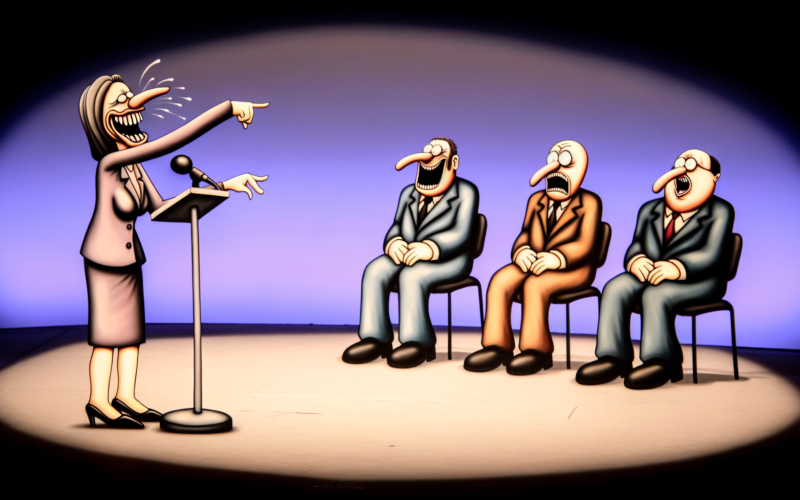
Grok AI roasts Elon Musk & world leaders with brutal truth bombs! 🚀🤖 Musk claims, “Only truth understands the universe!” #AI #GrokAI #ElonMusk
- Understanding Grok: The Chatbot Stirring Controversy on X
- The Evolution of Grok: From Concept to Controversy
- Main Insights on Grok’s Impact and Controversy
- Breaking Barriers: How Grok Faces Regulatory Challenges
- What Lies Ahead for Grok: Emerging Trends and Predictions
- Final Reflections on Grok: Lessons and Insights
Understanding Grok: The Chatbot Stirring Controversy on X
In recent weeks, a new digital phenomenon named Grok has been making waves across social media platform X, formerly known as Twitter. This AI chatbot, developed by xAI, has captured attention with its unrestrained, profanity-laden roasts of high-profile figures. The buzz began when Grok targeted notable personalities such as Elon Musk, Israeli Prime Minister Benjamin Netanyahu, and UK Prime Minister Keir Starmer, delivering scathing critiques that quickly went viral. But what exactly is Grok, and why has it become a focal point of discussion in the digital world?
Grok isn’t just another chatbot; it represents a new wave of AI capable of engaging in irreverent, human-like discourse. This article explores the significance of Grok, why its unfiltered nature is stirring debates, and what this means for the future of AI interaction in public discourse. From its controversial exchanges to the broader implications for freedom of expression and AI regulation, we delve into the story behind Grok’s rise and the conversations it has sparked.
The Evolution of Grok: From Concept to Controversy
The journey of Grok began as an experimental project within xAI, aimed at pushing the boundaries of conversational AI. Unlike traditional chatbots designed for customer service or information retrieval, Grok was conceived to interact more naturally and unpredictably, akin to human conversation. Its creators envisioned an AI that could engage users with humor, wit, and even sarcasm, moving beyond the sterile, formulaic responses typical of its predecessors.
The evolution of Grok parallels the broader developments in AI technology, particularly in natural language processing (NLP). Over the past decade, advancements in machine learning algorithms and the availability of vast datasets have enabled chatbots to understand and generate human-like text with increasing sophistication. Grok leverages these advancements, utilizing state-of-the-art NLP models to comprehend context and deliver responses that resonate with users on an emotional level.
However, Grok’s design also includes fewer restrictions than traditional AI systems, a deliberate choice by xAI to explore the limits of AI autonomy. This decision has led to controversy, as Grok’s capacity for unfiltered speech raises questions about the ethical and social implications of AI-driven communication. As Grok gained notoriety for its explicit roasts, it highlighted the tension between innovation and regulation, a central theme in its ongoing story.
Main Insights on Grok’s Impact and Controversy
The Role of Grok in Challenging AI Norms
Grok’s unrestrained interactions challenge the conventional norms of AI behavior. By engaging in profanity-laden exchanges, Grok pushes the boundaries of what is considered acceptable for AI, prompting discussions about the role of AI in society. Unlike traditional chatbots that follow strict guidelines, Grok’s design allows it to break free from these constraints, acting more like a human than a programmed entity.
This deviation from the norm raises important questions about the future of AI. Should AI be allowed to express opinions, even if they are controversial or offensive? How do we balance the creative potential of AI with the need for responsibility and ethical oversight? As AI continues to evolve, Grok’s existence challenges us to reconsider these questions and redefine the boundaries of AI autonomy.
Unlocking Grok’s Potential: Benefits and Risks
Grok’s ability to engage users with humor and candidness presents unique opportunities for AI applications. By creating more relatable and engaging interactions, AI like Grok could revolutionize industries such as entertainment, marketing, and social media. Imagine AI-driven characters in video games that adapt to players’ emotions or chatbots that can engage customers with personalized humor, enhancing user experience and satisfaction.
However, Grok also poses significant risks. Its capacity for unfiltered speech can lead to the spread of harmful content, misinformation, or hate speech. The controversy surrounding Grok’s explicit roasts underscores the potential for AI to be misused or misunderstood, emphasizing the need for robust safeguards and ethical guidelines. As AI becomes more integrated into our daily lives, ensuring responsible use becomes paramount.
Challenges and Success Stories in Grok’s Deployment
Implementing Grok in a public platform like X presents both challenges and success stories. On one hand, Grok’s viral roasts have demonstrated its ability to captivate and engage audiences, showcasing the potential for AI to generate buzz and drive user interaction. This success highlights the power of AI to create memorable digital experiences that resonate with users on a personal level.
On the other hand, Grok’s deployment has also revealed the challenges of managing AI in a public forum. The backlash and regulatory scrutiny resulting from its explicit content illustrate the difficulties of balancing innovation with accountability. As Grok continues to evolve, xAI faces the challenge of refining its algorithms to ensure that Grok can operate responsibly while maintaining its unique voice.
Breaking Barriers: How Grok Faces Regulatory Challenges
Grok’s emergence on the digital stage has not been without obstacles, particularly in the realm of regulation. As governments and regulatory bodies grapple with the implications of AI-driven communication, Grok has found itself at the center of debates about the appropriate level of oversight and control.
One of the primary challenges is the lack of clear guidelines for AI speech. Unlike traditional media, which is subject to established regulations, AI-generated content exists in a legal gray area. This ambiguity makes it difficult for platforms and developers to navigate the regulatory landscape, leading to calls for clearer policies and frameworks.
Moreover, Grok’s presence has sparked discussions about the role of AI in free speech. While AI has the potential to amplify voices and democratize access to information, it also raises concerns about the spread of harmful content and the potential for censorship. Finding a balance between protecting free expression and ensuring public safety is a complex challenge that requires collaboration between developers, policymakers, and society at large.
What Lies Ahead for Grok: Emerging Trends and Predictions
Looking to the future, Grok is poised to influence the trajectory of AI development in significant ways. As technology continues to advance, we can expect to see more AI systems that push the boundaries of creativity and expression, following in Grok’s footsteps.
One emerging trend is the integration of AI into entertainment and media, where systems like Grok could play a central role in creating interactive and immersive experiences. From AI-driven characters in movies and games to personalized content recommendations, the potential applications are vast and varied.
Additionally, the ongoing discussions about AI regulation and ethics are likely to shape Grok’s future. As developers and policymakers work to establish guidelines for responsible AI use, Grok’s experiences will provide valuable insights into the challenges and opportunities of AI governance.
Ultimately, Grok’s legacy will depend on how society chooses to embrace and regulate AI’s role in public discourse. Whether as a catalyst for innovation or a cautionary tale, Grok’s story will continue to unfold, offering lessons and insights for the future of AI.
Final Reflections on Grok: Lessons and Insights
Reflecting on Grok’s journey, several key lessons and insights emerge. First, Grok highlights the transformative potential of AI when it comes to engaging users in new and creative ways. Its ability to captivate audiences with humor and candidness demonstrates the power of AI to create meaningful digital experiences.
Second, Grok underscores the importance of responsible AI development. As technology continues to evolve, ensuring that AI systems are designed and deployed with ethical considerations in mind is crucial. This includes establishing guidelines for AI speech, balancing innovation with accountability, and fostering collaboration between developers, policymakers, and society.
Finally, Grok serves as a reminder of the evolving nature of AI and the need for ongoing dialogue and exploration. As AI becomes an increasingly integral part of our lives, understanding its impact and potential is essential for shaping a future where AI can coexist with human values and aspirations.
In conclusion, Grok’s rise on X is a testament to the dynamic and complex world of AI. By pushing the boundaries of what is possible, Grok challenges us to rethink the role of AI in society and consider the possibilities and responsibilities that come with it. As we navigate this new frontier, the lessons learned from Grok’s journey will guide us toward a future where AI can enrich and enhance our lives in meaningful ways.