


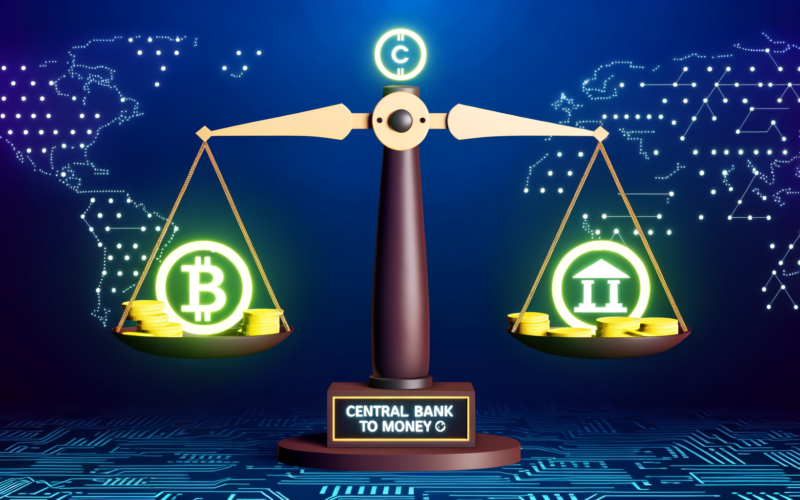
Europe’s tokenized markets need central bank money as a settlement anchor to scale. Legal clarity is essential for growth. #Crypto #Blockchain #Finance
- Introduction: Understanding the Need for Tokenized Central Bank Money
- The Evolution of Tokenized Financial Markets in Europe
- Main Insights on Tokenized Central Bank Money
- Overcoming Challenges in Tokenized Finance
- The Future of Tokenized Financial Markets in Europe
- Final Reflections on Tokenized Central Bank Money
Introduction: Understanding the Need for Tokenized Central Bank Money
In an era where digital transformation is reshaping financial landscapes, the concept of tokenized central bank money has emerged as a pivotal element in the evolution of Europe’s financial markets. This notion is not just a trend but a necessity for the scalability and stability of tokenized markets. The European Central Bank (ECB) is at the forefront of this transformation, with Executive Board member Piero Cipollone highlighting the crucial role that tokenized central bank money plays in anchoring Europe’s tokenized financial ecosystem. In this article, we will delve into the significance of this concept, explore the ongoing initiatives such as Pontes, and discuss the broader legal reforms required to fully realize the potential of tokenized finance in Europe.
The Evolution of Tokenized Financial Markets in Europe
The journey of tokenized financial markets in Europe has been marked by rapid technological advancements and increasing interest from both public and private sectors. Traditionally, financial transactions have relied on centralized systems that, while effective, have limitations in terms of speed, transparency, and security. The advent of blockchain technology introduced the possibility of decentralized, tokenized assets, promising greater efficiency and enhanced security.
From Concept to Reality
The concept of tokenization, which involves converting rights to an asset into a digital token on a blockchain, has evolved from a theoretical idea to a practical application within a few years. This evolution was driven by the need for more efficient financial systems capable of handling the increasing volume and complexity of transactions in today’s digital economy. Europe, with its diverse and interconnected financial markets, has emerged as a leader in adopting tokenization technologies, leveraging them to streamline processes and enhance cross-border financial interactions.
Key Milestones and Initiatives
Several key milestones have marked the journey towards a tokenized financial ecosystem in Europe. The launch of the Eurosystem’s distributed ledger technology (DLT) settlement initiative, Pontes, is one such milestone. Scheduled for an initial launch in the third quarter of 2026, Pontes aims to connect market DLT platforms with the Eurosystem’s TARGET Services, facilitating settlement in central bank money. This initiative is part of the ECB’s broader Appia roadmap, which outlines a vision for a comprehensive European tokenized financial ecosystem by 2028.
Main Insights on Tokenized Central Bank Money
The integration of tokenized central bank money into Europe’s financial markets is a complex yet essential endeavor. It involves several layers of innovation, collaboration, and regulatory adjustments to ensure a seamless transition from traditional financial systems to a tokenized framework.
The Role of Tokenized Central Bank Money in Revolutionizing Financial Markets
Tokenized central bank money serves as a public settlement anchor, ensuring stability and trust in financial transactions. By providing a reliable and universally accepted medium of exchange, it mitigates the risks associated with private digital money, such as price volatility and credit risk. This stability is crucial for the scalability of tokenized markets, allowing participants to engage in transactions with confidence and reducing friction in financial interactions.
Unlocking Potential: Benefits and Applications
The benefits of integrating tokenized central bank money into financial markets are manifold. It enhances transparency by enabling real-time tracking of transactions, reduces transaction costs by eliminating intermediaries, and increases efficiency by streamlining settlement processes. Additionally, it opens up new applications in areas such as cross-border payments, securities trading, and supply chain finance, where tokenization can significantly enhance speed and transparency.
Challenges and Success Stories in Deployment
While the potential of tokenized central bank money is immense, its deployment is not without challenges. Technical hurdles such as interoperability between different DLT platforms, regulatory compliance, and cybersecurity concerns need to be addressed. However, there are also success stories that offer valuable lessons. For instance, pilot projects in countries like Sweden and Estonia have demonstrated the feasibility and benefits of integrating tokenized central bank money into existing financial systems, providing a blueprint for broader implementation across Europe.
Overcoming Challenges in Tokenized Finance
Despite the promising prospects, the path to a fully tokenized financial ecosystem in Europe is fraught with challenges. These challenges are multifaceted, ranging from technological and regulatory hurdles to the need for enhanced public-private collaboration.
Breaking Barriers: How Tokenized Finance Faces Interoperability Challenges
One of the primary challenges in tokenized finance is ensuring interoperability between various DLT platforms. Without standardized protocols and data formats, the seamless transfer of tokenized assets across different systems becomes difficult, hindering the scalability of tokenized markets. Initiatives like Appia aim to address these challenges by developing interoperability standards that facilitate cross-platform transactions and enhance the overall efficiency of the financial ecosystem.
Addressing Legal and Regulatory Frameworks
The absence of a comprehensive legal and regulatory framework for tokenized finance poses significant risks. Building advanced settlement infrastructure on a patchwork of regulations can lead to inconsistencies and legal ambiguities, limiting the potential benefits of tokenization. Cipollone’s call for a dedicated legal framework underscores the importance of aligning regulatory practices with technological advancements to support the seamless issuance and transfer of tokenized assets across Europe.
The Future of Tokenized Financial Markets in Europe
As Europe continues to advance towards a tokenized financial ecosystem, several trends and developments are likely to shape the future landscape.
Emerging Trends: Opportunities and Predictions
The integration of tokenized central bank money is expected to drive several emerging trends in the financial sector. These include the proliferation of decentralized finance (DeFi) platforms, increased adoption of digital currencies, and enhanced cross-border financial cooperation. As these trends materialize, they present numerous opportunities for innovation and growth, fostering a more inclusive and efficient financial ecosystem.
How Tokenized Finance Will Shape Policy and Regulation
The rise of tokenized finance is also likely to influence policy and regulatory frameworks across Europe. Policymakers will need to adapt to the changing financial landscape, developing regulations that balance innovation with consumer protection and market stability. This evolution will require ongoing dialogue and collaboration between regulators, industry stakeholders, and technology providers to ensure a harmonious and forward-looking regulatory environment.
Final Reflections on Tokenized Central Bank Money
In conclusion, the integration of tokenized central bank money into Europe’s financial markets represents a significant step towards a more efficient, transparent, and inclusive financial ecosystem. By addressing the challenges and leveraging the opportunities presented by tokenization, Europe is poised to lead the way in the digital transformation of global finance.
Key Lessons: What We’ve Learned and What Lies Ahead
The journey towards a tokenized financial ecosystem offers several key lessons. First, the importance of collaboration between public and private sectors cannot be overstated. Second, the need for a robust legal and regulatory framework is critical to ensuring the success of tokenized finance. Finally, the integration of tokenized central bank money is essential for providing stability and scalability in financial markets. As Europe continues to navigate this transformation, the insights gained will serve as a valuable guide for other regions and industries exploring the potential of tokenization.
By embracing these lessons and continuing to innovate, Europe is well-positioned to shape the future of tokenized finance, setting a precedent for the global financial community.