



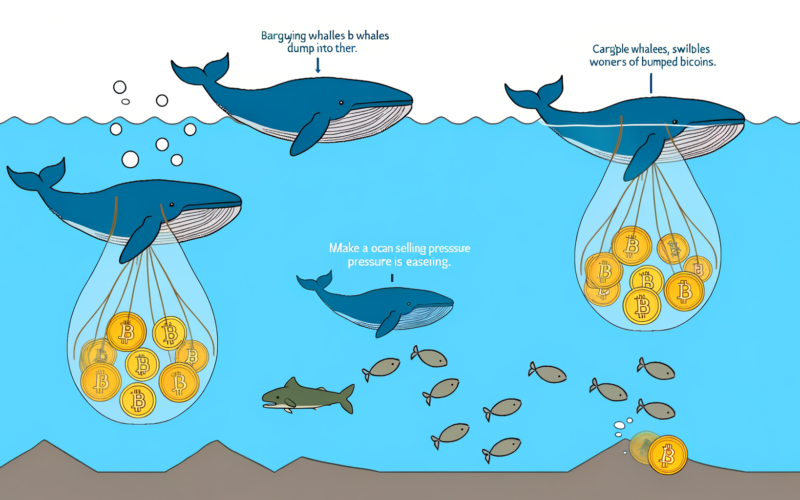
Whales continue to dump Bitcoin, affecting prices. With reduced sell pressure, is a bounce back imminent or is another drop to $55K looming? #Bitcoin #CryptoNews #BTC
- Introduction
- The Historical Context of Bitcoin’s Market Influence
- Main Insights on Bitcoin’s Current Market Dynamics
- Challenges in Navigating Bitcoin’s Market
- Future Outlook for Bitcoin
- Final Reflections on Navigating Bitcoin’s Market
Introduction
Bitcoin, the flagship cryptocurrency, remains a focal point of discussion and speculation in financial markets. Despite its volatile nature, its influence on the global economy is undeniable. Recently, Bitcoin has experienced a shift in market dynamics characterized by easing sell pressure yet continued significant activity from large investors, commonly referred to as “whales.” This article aims to explore the intricate balance between decreasing sell pressure and the persistent influence of whales on Bitcoin’s market movements. By understanding these dynamics, investors and enthusiasts can gain insights into Bitcoin’s current state and potential future trajectories.
The Historical Context of Bitcoin’s Market Influence
To fully grasp the current situation, it’s essential to revisit Bitcoin’s historical journey. Bitcoin was introduced in 2009 by an anonymous entity known as Satoshi Nakamoto. It quickly gained traction as a decentralized digital currency, challenging the traditional financial system. Over the years, Bitcoin has experienced numerous cycles of boom and bust, with prices reaching all-time highs followed by significant corrections.
In the early days, Bitcoin’s market was relatively small, with limited participants. However, as awareness grew and institutional investors entered the scene, Bitcoin’s market dynamics evolved. The introduction of futures trading in 2017 further legitimized Bitcoin as an asset class, attracting more significant capital inflows.
Main Insights on Bitcoin’s Current Market Dynamics
The Evolution of Sell Pressure
Sell pressure refers to the tendency of holders to sell their Bitcoin, driving prices down. Recently, there has been a notable reduction in sell pressure, as evidenced by a decrease in Bitcoin deposits to centralized exchanges. In February, exchange inflows hit around 60,000 BTC, but this number has since dropped to approximately 23,000 BTC. This moderation suggests a shift from a panic-driven sell-off to a more stable market environment.
Whale Activity: A Double-Edged Sword
Whales, or large Bitcoin holders, play a significant role in market dynamics. CryptoQuant’s “Exchange Whale Ratio” indicates an increase in large depositors’ activity, with 64% of all Bitcoin exchange inflows attributed to the top 10 by volume. This concentration of activity suggests that while general sell pressure is easing, whales continue to influence market movements significantly.
The Great Redistribution
The concept of the “great redistribution” refers to the transfer of Bitcoin from long-term holders to new owners. This redistribution can lead to increased market liquidity and potentially reduce volatility. However, it also raises concerns about market manipulation, as whales can significantly impact prices through coordinated selling or buying.
Bitcoin’s Price Trajectory
Bitcoin’s price has experienced significant fluctuations, reaching an all-time high of $126,080 before falling 46% to around $67,582. Despite this correction, Bitcoin remains a valuable asset with potential for future growth. Analysts predict that the “ultimate bear market bottom” could be around $55,000, with limited “dry powder” or USDT available to fuel a significant rally.
The Risk of Market Manipulation
Whale activity poses a risk of market manipulation, as large holders can influence prices through strategic buying or selling. This influence can lead to market instability, affecting smaller investors and overall market sentiment.
Regulatory Uncertainty
The evolving regulatory landscape remains a challenge for Bitcoin. Governments worldwide are grappling with how to regulate cryptocurrencies, impacting market dynamics and investor confidence. Clarity and consistency in regulation are essential for fostering a stable market environment.
Volatility and Investor Sentiment
Bitcoin’s inherent volatility continues to be a challenge for investors. Price swings can lead to emotional decision-making, resulting in panic selling or buying. Educating investors on long-term strategies and risk management is crucial for navigating this volatility.
Future Outlook for Bitcoin
The Role of Institutional Investors
Institutional investors are expected to play an increasingly significant role in Bitcoin’s market dynamics. Their entry into the market can provide stability and liquidity, potentially reducing volatility. However, their influence also raises concerns about centralized control and market manipulation.
Technological Advancements and Adoption
Technological advancements, such as the Lightning Network and Bitcoin ETFs, have the potential to enhance Bitcoin’s usability and adoption. These developments can attract new investors and increase market participation, driving demand and potentially stabilizing prices.
The Impact of Macroeconomic Factors
Global economic conditions, such as inflation and monetary policy, can impact Bitcoin’s market dynamics. As a hedge against inflation, Bitcoin may attract more investors seeking to preserve wealth in uncertain economic times.
In conclusion, Bitcoin’s market dynamics are influenced by a complex interplay of factors, including sell pressure, whale activity, regulatory developments, and macroeconomic conditions. Understanding these dynamics is crucial for investors seeking to navigate Bitcoin’s volatile market. Despite challenges, Bitcoin remains a valuable asset with potential for future growth. By staying informed and adopting a long-term perspective, investors can position themselves to capitalize on Bitcoin’s evolving market landscape.