


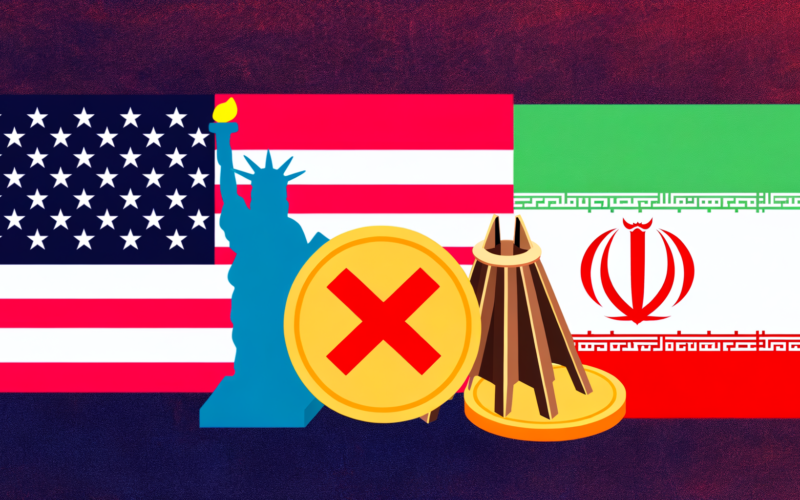
US Treasury sanctions two UK-registered crypto exchanges linked to Iran, marking a first in digital asset sanctions. #Crypto #Sanctions #IranCrypto
- Introduction: Understanding U.S. Sanctions on Crypto Exchanges
- Historical Context: The Intersection of Cryptocurrencies and Sanctions
- Main Insights on Sanctioned Crypto Exchanges
- Challenges in Enforcing Crypto Sanctions
- Future Outlook: The Evolving Landscape of Crypto Regulation
- Final Reflections on Crypto Exchange Sanctions
Introduction: Understanding U.S. Sanctions on Crypto Exchanges
In a significant move, the United States Treasury has taken the unprecedented step of sanctioning cryptocurrency exchanges linked to Iran’s financial system. This action marks a new chapter in how digital assets are perceived and regulated on the global stage. As cryptocurrencies continue to redefine financial landscapes, their intersection with international sanctions poses unique challenges and opportunities. This article explores the implications, context, and future outlook of such sanctions, providing readers with a comprehensive understanding of this pivotal development.
Historical Context: The Intersection of Cryptocurrencies and Sanctions
A Brief History of U.S. Sanctions
U.S. sanctions have long been a tool for enforcing international policy, aimed at curbing activities deemed harmful to global peace and security. Traditionally, these sanctions targeted conventional financial institutions, restricting access to the global banking network.
The Emergence of Cryptocurrencies
In contrast, cryptocurrencies emerged as decentralized digital assets, promising unregulated and borderless financial transactions. They gained popularity for their potential to bypass traditional banking systems, a feature both celebrated and criticized. The rise of digital currencies posed new challenges for enforcement agencies, as they presented alternative channels for circumventing sanctions.
The Shift Towards Digital Asset Sanctions
The decision to sanction UK-registered crypto exchanges linked to Iran underscores a strategic pivot by the U.S. Treasury. This shift highlights the growing recognition of digital assets as integral components of global finance, necessitating updated regulatory approaches to address their unique characteristics.
Main Insights on Sanctioned Crypto Exchanges
The Targeted Exchanges: Zedcex and Zedxion
The U.S. Treasury’s Office of Foreign Assets Control (OFAC) identified two UK-registered exchanges—Zedcex Exchange Ltd. and Zedxion Exchange Ltd.—as key players in Iran’s financial network. These platforms allegedly facilitated substantial transactions for entities associated with the Islamic Revolutionary Guard Corps (IRGC), circumventing international restrictions.
Zedcex Exchange Ltd.
Zedcex, reportedly processing transactions exceeding $94 billion since its registration in 2022, emerged as a critical node in Iran’s digital finance network. Its operations highlight the potential scale and impact of crypto exchanges in facilitating sanctioned activities.
Zedxion Exchange Ltd.
Similarly, Zedxion played a significant role in supporting Iranian entities, leveraging the anonymity and decentralization of cryptocurrencies to mask financial activities. Together, these exchanges illustrate how digital platforms can be exploited for geopolitical purposes.
The Role of Key Iranian Figures
In addition to targeting exchanges, the U.S. Treasury sanctioned prominent Iranian figures, including Eskandar Momeni Kalagari and Babak Morteza Zanjani. These individuals allegedly played pivotal roles in financing activities linked to the IRGC, demonstrating the interconnectedness of digital assets and geopolitical strategies.
Eskandar Momeni Kalagari
As Iran’s minister of the interior, Kalagari oversaw law enforcement activities, including those related to domestic suppression. His designation highlights the broader implications of digital financial networks in supporting state apparatuses.
Babak Morteza Zanjani
Zanjani, a well-known businessman, became a focal point in the sanctions narrative due to his involvement in laundering oil revenues. His activities underscore the adaptability of sanctioned networks in exploiting digital currencies to sustain operations.
Strategic Implications of Sanctions on Crypto Exchanges
The decision to target cryptocurrency exchanges marks a strategic evolution in U.S. policy, reflecting a nuanced understanding of digital finance. It signals a broader shift towards recognizing cryptocurrencies as both a tool for innovation and a potential vector for illicit activities.
Challenges in Enforcing Crypto Sanctions
The Complexity of Monitoring Digital Transactions
Enforcing sanctions on digital asset platforms presents unique challenges. Unlike traditional banking systems, cryptocurrencies operate on decentralized networks, making it difficult to trace and control transactions.
Decentralization and Anonymity
The decentralized nature of cryptocurrencies, combined with the anonymity they offer, complicates efforts to monitor and regulate transactions. This characteristic necessitates innovative approaches to enforcement, relying on advanced technologies and international cooperation.
The Role of Blockchain Analytics
Blockchain analytics firms, such as Elliptic, play a critical role in identifying and tracking suspicious activities. Their expertise in analyzing complex blockchain data is essential for effective enforcement and highlights the importance of technological partnerships in modern regulatory frameworks.
Legal and Regulatory Hurdles
The evolving nature of cryptocurrencies poses legal and regulatory challenges for enforcement agencies. Developing comprehensive legal frameworks that address the unique characteristics of digital assets is crucial for effective policy implementation.
Developing International Standards
Establishing international standards and cooperation is vital for addressing the cross-border nature of cryptocurrencies. Collaborative efforts among nations can enhance regulatory consistency and effectiveness, mitigating the risk of regulatory arbitrage.
Balancing Innovation and Regulation
Regulators face the delicate task of balancing the promotion of innovation with the need for oversight. Ensuring that regulatory measures do not stifle technological advancements is essential for fostering a healthy digital asset ecosystem.
Future Outlook: The Evolving Landscape of Crypto Regulation
Emerging Trends in Crypto Regulation
The sanctioning of crypto exchanges signals a broader trend towards increased regulation and oversight in the digital asset space. As cryptocurrencies gain mainstream acceptance, regulatory frameworks will continue to evolve to address emerging challenges and opportunities.
Adoption of Advanced Monitoring Technologies
The integration of advanced monitoring technologies, such as artificial intelligence and machine learning, will play a crucial role in enhancing regulatory capabilities. These technologies offer the potential to identify and mitigate risks in real-time, supporting proactive enforcement strategies.
The Role of Global Cooperation
Global cooperation will become increasingly important in addressing the cross-border nature of digital assets. Collaborative efforts among nations can enhance regulatory consistency and effectiveness, fostering a secure and transparent digital finance ecosystem.
Speculative Scenarios and Predictions
Looking ahead, the future of crypto regulation will be shaped by ongoing technological advancements and geopolitical developments. Speculative scenarios include:
Increased Role of Central Bank Digital Currencies (CBDCs)
The rise of Central Bank Digital Currencies (CBDCs) may influence the regulatory landscape, offering a state-backed alternative to private cryptocurrencies. CBDCs could play a role in enhancing financial stability and transparency while addressing concerns related to illicit activities.
The Impact of Decentralized Finance (DeFi)
Decentralized Finance (DeFi) platforms, characterized by their open and permissionless nature, present unique regulatory challenges. As DeFi continues to grow, regulators will need to develop innovative approaches to address the associated risks and complexities.
Final Reflections on Crypto Exchange Sanctions
Lessons Learned and Key Takeaways
The sanctioning of crypto exchanges linked to Iran underscores the complex interplay between digital assets and international policy. Key lessons include:
The Importance of Technological Adaptation
Adapting to technological advancements is crucial for effective regulatory enforcement. Embracing innovative solutions and partnerships can enhance regulatory capabilities and support proactive measures.
The Need for Comprehensive Legal Frameworks
Developing comprehensive legal frameworks that address the unique characteristics of digital assets is essential for effective policy implementation. These frameworks should balance innovation with oversight, promoting a secure and transparent digital finance ecosystem.
Concluding Thoughts
As cryptocurrencies continue to reshape the financial landscape, their role in international policy will evolve. The sanctioning of crypto exchanges linked to Iran represents a significant step in recognizing the growing impact of digital assets on global finance. Moving forward, regulators and policymakers must navigate the complexities of this dynamic environment, leveraging technology and cooperation to address emerging challenges and opportunities.