
AI is disrupting creative industries, potentially slashing creator earnings by 24% by 2028. Explore implications on laws and digital media. #AIImpact #CreativeEconomy #UNESCO
- Introduction: Understanding AI’s Emerging Influence on Creative Economies
- The Historical Context: How AI Became a Central Player in Creativity
- Main Insights on AI Disruption in Creative Industries
- Challenges and Opportunities: Navigating AI in Creative Economies
- Future Outlook: Navigating AI’s Creative Trajectory
- Final Reflections: Embracing Change and Innovation
Introduction: Understanding AI’s Emerging Influence on Creative Economies
Artificial Intelligence (AI) is rapidly transforming various sectors, but its impact on creative industries is particularly profound. A recent report by UNESCO has painted a concerning picture for creators worldwide, forecasting significant revenue declines by 2028 due to AI-generated content. This article delves into these projections, exploring the potential ramifications for music and audiovisual creators and the broader creative economy. Understanding this evolving landscape is crucial for stakeholders to navigate the challenges and harness opportunities presented by AI technologies.
The Historical Context: How AI Became a Central Player in Creativity
The journey of AI into the creative realm has been swift and transformative. Initially, AI was perceived as a tool for automation, primarily in sectors such as manufacturing and data analysis. However, advancements in machine learning and neural networks have enabled AI systems to create music, art, and even literature, challenging traditional notions of creativity. Over the last decade, AI’s capabilities in generating creative content have evolved from rudimentary outputs to sophisticated compositions indistinguishable from human-made works. This evolution has been fueled by vast datasets and powerful computational resources, allowing AI to learn, mimic, and innovate at an unprecedented scale.
The integration of AI into creative processes has been a double-edged sword. On one hand, it has democratized content creation, enabling individuals with limited resources to produce high-quality outputs. On the other hand, it has sparked debates on intellectual property (IP) rights, fairness, and the potential erosion of human creativity. As AI becomes more ingrained in creative workflows, understanding its historical and technical underpinnings is essential for assessing its future impact.
Main Insights on AI Disruption in Creative Industries
The Economic Impact: Projected Revenue Losses
According to UNESCO, AI could reduce global revenues for music creators by up to 24% and audiovisual creators by 21% by 2028. These projections highlight the competitive threat posed by AI-generated content, which can be produced at lower costs and at scale. As AI systems become more adept at mimicking human creativity, they are likely to capture a significant share of consumer attention and spending, potentially sidelining traditional creators.
Legal and Ethical Considerations: The Strain on Copyright Laws
The legal frameworks designed to protect creators are under immense pressure. Existing doctrines such as fair use and fair dealing were established to handle case-specific transformative uses, not the wholesale replication of copyrighted materials by AI. This mismatch has led to a legal quagmire, with creators and technology firms often at odds. Ishita Sharma, managing partner at Fathom Legal, emphasizes the need for recalibrating copyright laws to address the “distributive imbalance” created when AI systems extract value from protected works without proportionate compensation.
The Role of Digital Platforms: A Double-Edged Sword
Digital platforms have become both a boon and a bane for creators. While they offer lucrative channels for distribution and monetization, they also expose creators to the risks of IP infringement and algorithmic biases. The UNESCO report highlights that digital revenues now constitute 35% of creators’ income, a significant increase from 17% in 2018. However, this shift has also made creators more vulnerable to the whims of platform algorithms, which can marginalize lesser-known artists in favor of AI-generated content.
Technological Advancements: AI’s Creative Capabilities
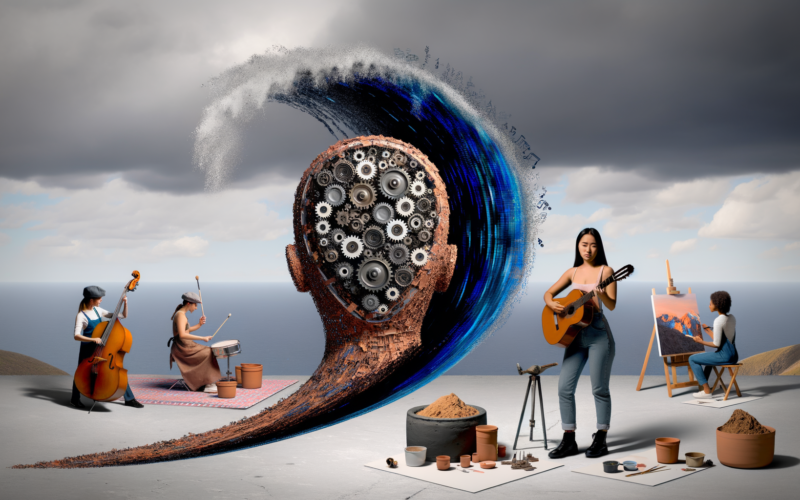
AI’s ability to generate content has advanced rapidly, with systems capable of producing music, visual art, and even film scripts. These capabilities are not just limited to replication; AI is also being used to enhance and innovate within creative processes. For instance, AI tools are being employed to assist musicians in composing, providing new sounds and arrangements that push creative boundaries. However, this technological prowess raises questions about the originality and authenticity of AI-generated works, challenging traditional definitions of creativity.
Overcoming Structural Gaps
One of the significant challenges highlighted by UNESCO is the digital skills divide, with a stark contrast between developed and developing countries. This divide limits the ability of creators in less technologically advanced regions to compete on a global scale. Moreover, the lack of national capacity to measure digital cultural consumption further exacerbates these challenges, leaving many creators without the means to understand and adapt to changing market dynamics.
Legal Battles and Industry Responses
The legal landscape is fraught with challenges as creators and publishers engage in litigation against tech giants like OpenAI and Google over unlicensed use of copyrighted materials. These legal battles are crucial in setting precedents for how AI systems can utilize copyrighted content. At the same time, industry coalitions, such as the Creators Coalition on AI, are advocating for enforceable standards to ensure fair compensation and ethical AI training practices.
Embracing AI for Creative Growth
Despite the challenges, AI presents significant opportunities for innovation in the creative sector. Tech companies like Google are investing in initiatives to train artists in AI skills, recognizing AI literacy as a crucial competency for future creative endeavors. These efforts aim to empower creators to harness AI as a tool for enhancing their work, rather than viewing it solely as competition.
As AI continues to evolve, its role in the creative industries will likely expand, presenting both challenges and opportunities. Stakeholders must navigate this complex landscape by advocating for fair legal protections, embracing technological advancements, and fostering collaboration between creators and AI developers. The future of creativity will be shaped by how well these diverse interests are balanced, ensuring that AI serves as a complement to human creativity rather than a substitute.
Final Reflections: Embracing Change and Innovation
The rise of AI in creative industries is a testament to the transformative power of technology. While it poses significant challenges, it also offers unprecedented opportunities for innovation and growth. As we move forward, it is crucial for creators, policymakers, and technology firms to engage in constructive dialogue and collaboration. By doing so, they can ensure that AI enhances rather than diminishes the rich tapestry of human creativity, paving the way for a vibrant and inclusive creative future.